
eVTOL
Research on Electric-Vertical Take Off and Landing (eVTOL) is focused on its principal enabler and its principal barrier—heavy and unreliable electric power—as well as the new aeroelastic challenges that arise in circumventing it. Research investigates engine-generator-based hybrid-electric power, hydrogen fuel cell-based power, and aeroelasticity of variable and stopped rpm rotors, all aimed at extending the safety, payload, and range of this new class of aircraft while minimizing hover noise.
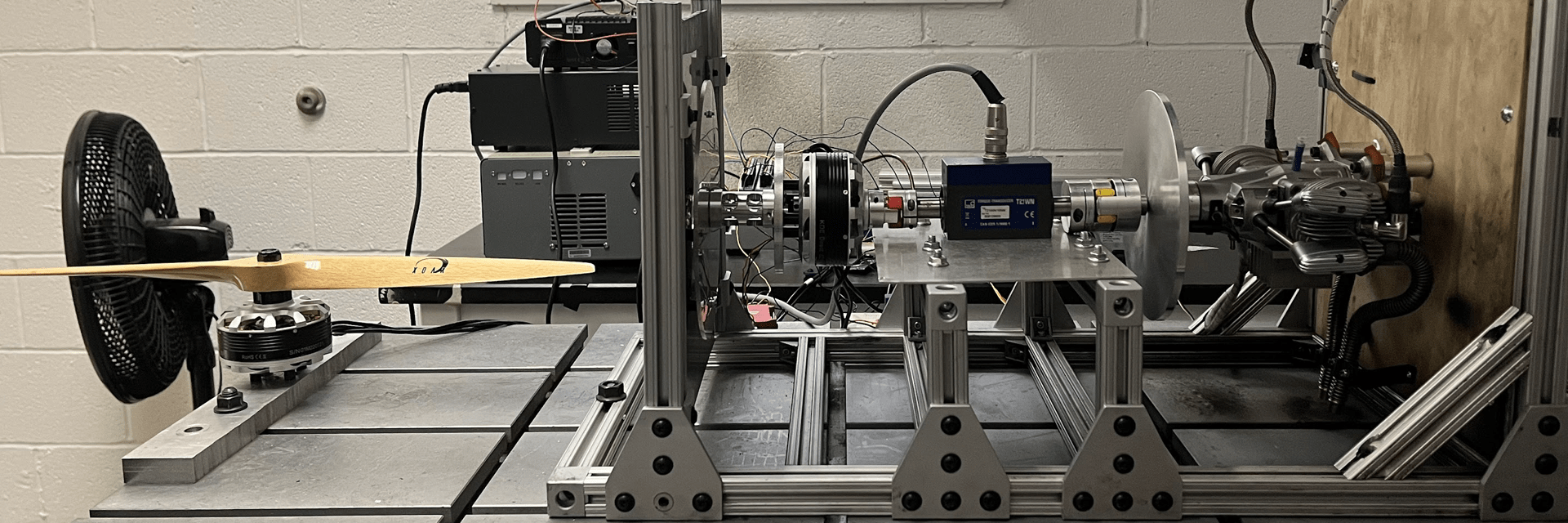
Experimental research in this area is conducted in the center’s Electric Aviation Laboratory and supported by the Acoustic Hover Chamber and Maryland Tiltrotor Rig.
Engine-generator based hybrid-electric power systems search for architectures that retain the classical benefits of energy and power density of internal combustion engines while harnessing rapid rpm variation enabled by electric drives, transmission by wire, power sharing with batteries for air-launch, quiet engine-off operations, and maximization of engine efficiency.
Power sharing control is studied to minimize weight by tailoring the architecture to the unique mission, power profiles, and aeromechanics of rotorcraft, particularly for long range, versatile UAS.
The unusual aeroelasticity of variable and stopped rpm rotors—installed on flexible non-rotating structures such as wings and booms—are studied with in-house computational aeromechanics tools and phenomenon validated in the in-house experimental facilities.
Faculty



Hydrogen
The promises and challenges of hydrogen fuel cell helicopters are explored through modeling, experimentation, and full-scale flight testing. The broad aspiration is to develop long range clean and quiet eVTOL to transform the low altitude aviation space of the future.
The Rothblatt hydrogen program is a AGRC-Unither Bioelectronics (a subsidiary of United Therapeutics) collaboration intended to deliver manufactured organs to hospitals for lifesaving human transplants with clean vertical lift.
Models are developed for fuel cell and helicopter and validated with full-scale flight test data. A converted electric Robinson R-44 helicopter, powered by proton exchange membrane (PEM) fuel cells, with compressed gas (700 bar) hydrogen storage is flown as an experimental aircraft. The validated models and the knowledge gained are used to develop a larger, more capable, and certifiable helicopter with liquid hydrogen storage onboard with a range of 200 nautical miles or more and payload of critical life-saving organs, medical equipment, and personnel equivalent of two passengers including a pilot.