
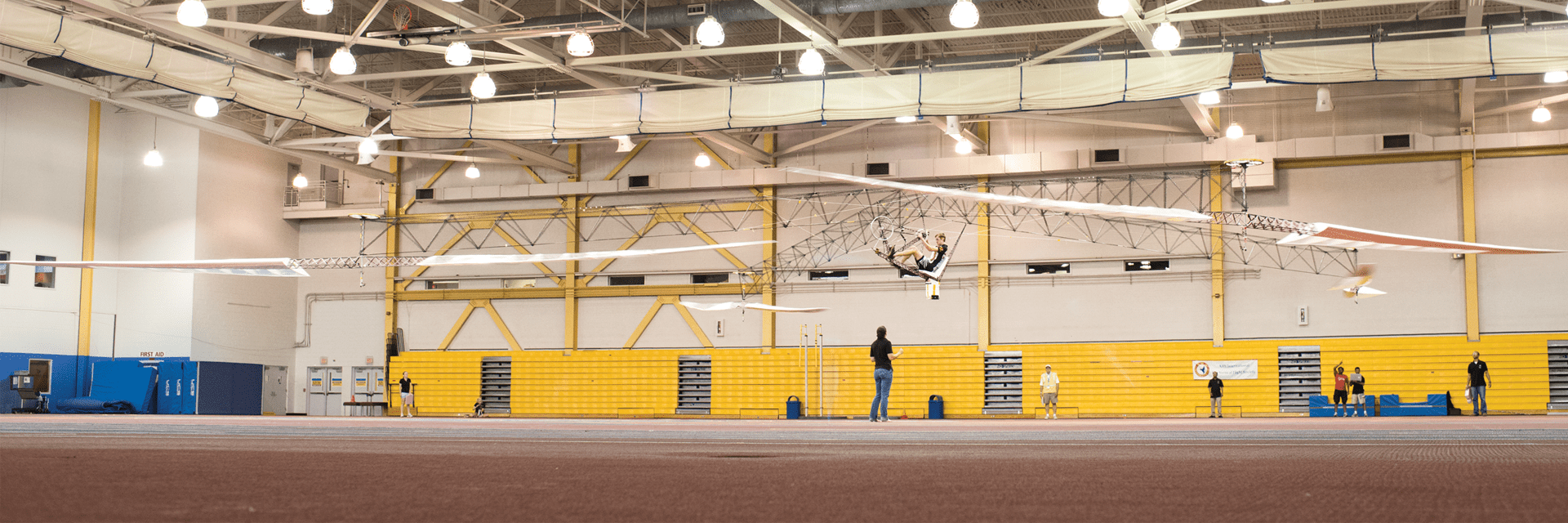
Gamera
The Gamera Project began as the University of Maryland’s pursuit of the American Helicopter Society’s Igor I. Sikorsky Human Powered Helicopter Competition, one of aviation’s most elusive challenges.
Established in 1980, the competition challenged teams to build a human-powered helicopter capable of remaining airborne for at least 60 seconds, reaching an altitude of 3 meters (9.8 feet) and remaining within a 10-meter area—all under human power alone.
For more than three decades, no team successfully met all three requirements, and the challenge inspired UMD students and faculty to push the limits of lightweight structures, rotorcraft design and human-powered flight through the development of Gamera I and Gamera II.
Gamera I launched Maryland’s pursuit of human-powered helicopter flight. In 2011, the student-designed aircraft achieved an 11.4-second flight, setting world records for human-powered helicopter flight duration and flight duration by a female pilot.
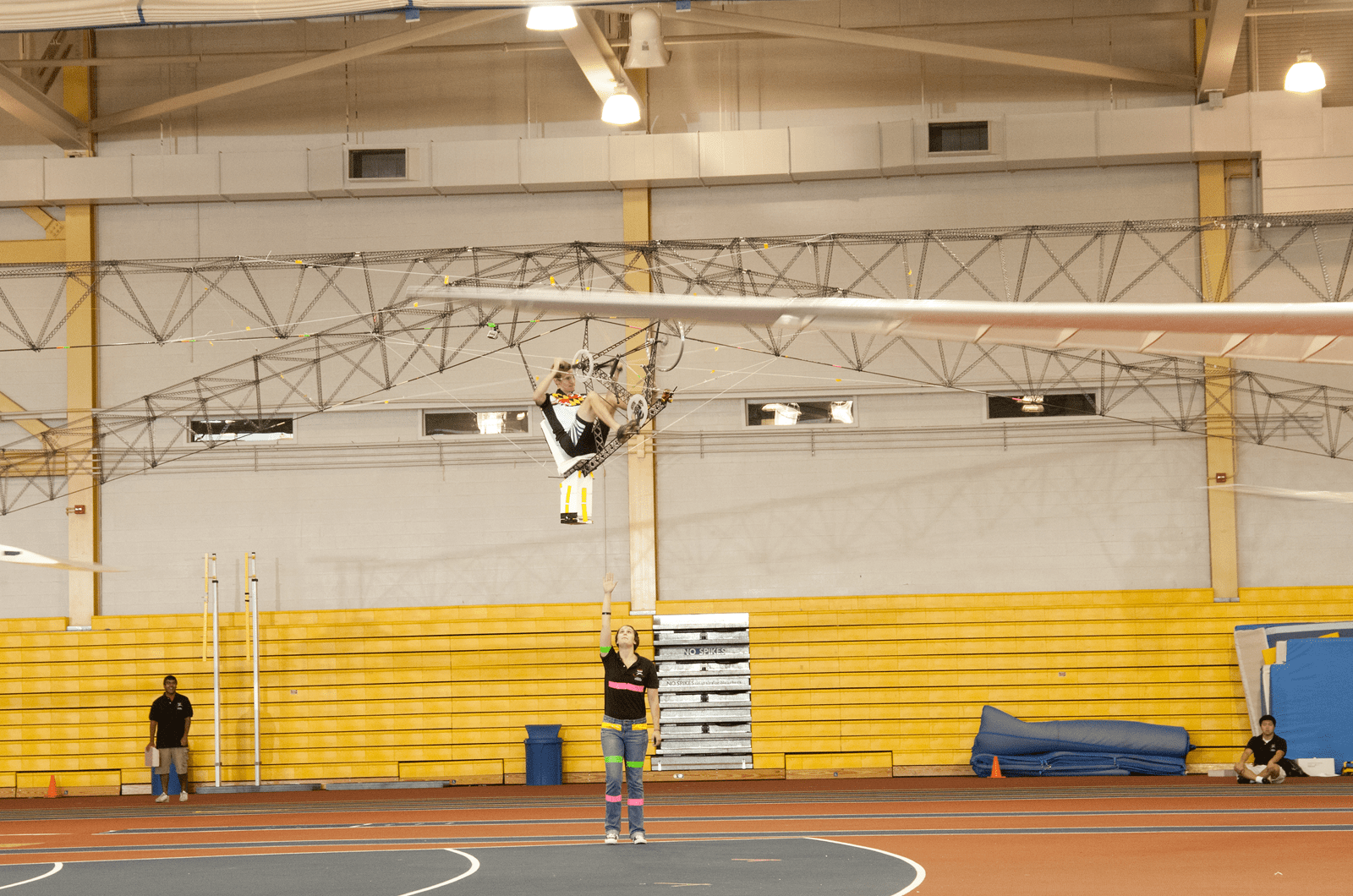
Gamera II
Building on Gamera I, students developed a lighter, stronger and more efficient aircraft designed to meet the demanding requirements of the Sikorsky Prize.
Gamera II ultimately reached 10.8 feet in altitude and set a new flight-duration record of 97.5 seconds, demonstrating the extraordinary potential of human-powered vertical flight.
- 2013 Best Paper in Advanced Vertical Flight, "Control and Stability Characteristics of Gamera II: A Human Powered Helicopter" - 69th American Helicopter Society Forum, Phoenix, Ariz.
- 2012 Best Paper in Aircraft Design, "Design Optimization of Gamera II: A Human Powered Helicopter" - 68th American Helicopter Society Forum, Fort Worth, Tex.
- 2012 Igor I. Sikorsky International Trophy, American Helicopter Society
- 2012 Fédération Aéronautique Internationale Certified World Record for Flight Duration
- 2012 National Aeronautics Association U.S. National Record Certificate for Flight Duration
- 2012 Fédération Aéronautique Internationale World Record Certificate for Flight Duration
- 2012 National Aeronautics Association U.S. National Record Certificate for Flight Duration
- 2011 Fédération Aéronautique Internationale Certified World Record for Flight Duration by Female Pilot
- 2011 National Aeronautics Association Collier Trophy Nominee
- 2011 American Helicopter Museum Education Center Achievement Award
- 2011 National Aeronautics Association World Record Certificate for Flight Duration
- 2011 National Aeronautics Association World Record Certificate for Flight Duration by Female Pilot
- 2011 Dedication of Gamera I Vehicle Elements to College Park Aviation Museum
Special Thanks from the Team
The Gamera team wishes to thank President Darryll Pines for sponsoring the Gamera Project, Inderjit Chopra and V.T. Nagaraj for serving as advisors, other human-powered helicopter projects around the world for providing inspiration and competition, and the thousands of well-wishers who continued to cheer us on.
Gamera S: Fly-by-Sun
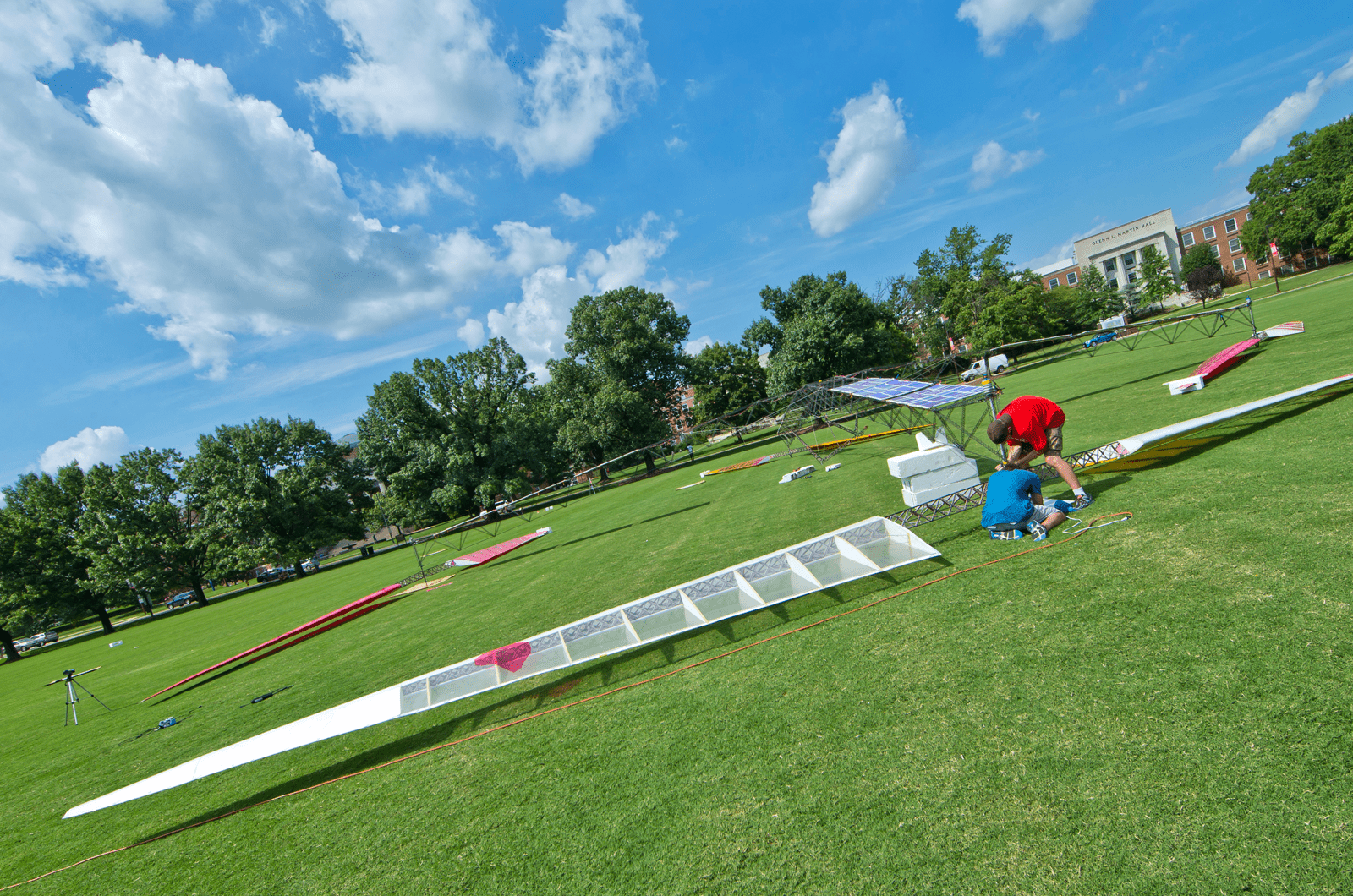
In 2014, the Gamera project evolved into Gamera-S, challenging students to adapt the human-powered aircraft for flight using solar energy alone.
First Solar-Powered Flight
In 2016, Gamera-S achieved its first successful solar-powered flights, carrying a pilot for nine seconds and demonstrating the feasibility of solar-powered human-carrying vertical flight.
Learn more about this flight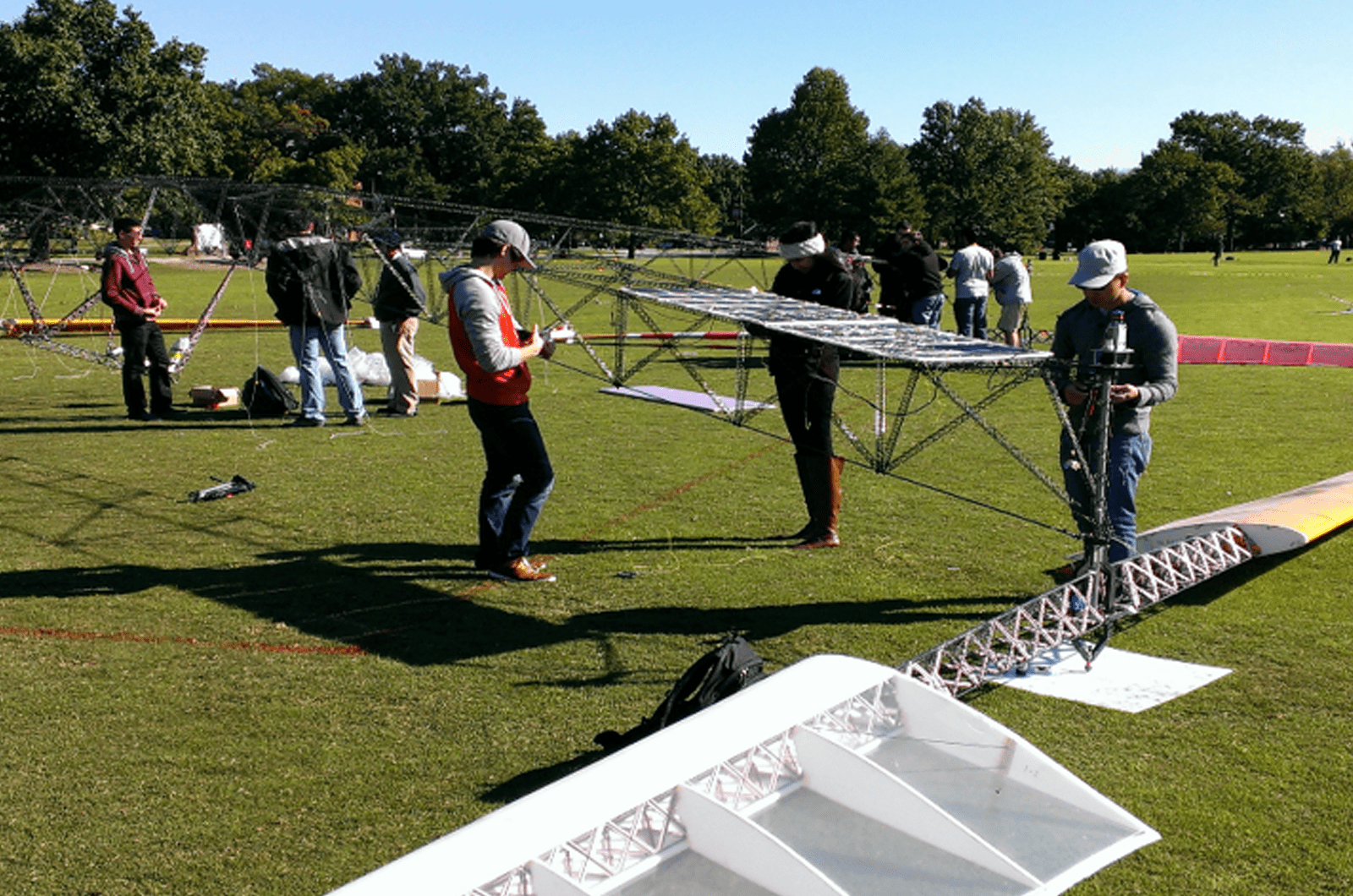
Specifications
The Gamera-S craft has 1.1 kW installed solar power.
- Rotors: 42.5 lb
- Gearboxes and Motors: 14 lb
- Solar Panels: 14 lb
- Structure: 51 lb
- Empty Weight: 121.5 lb
- Pilot/Payload: 100 lb
- Gross Weight: 221.5 lb
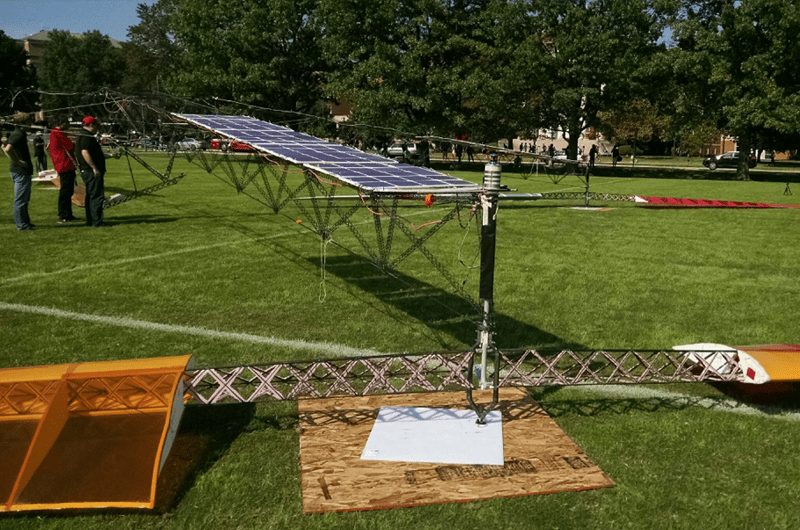
Gamera-S uses Monocrystalline silicon solar cells that utilize direct solar only, with no onboard batteries.
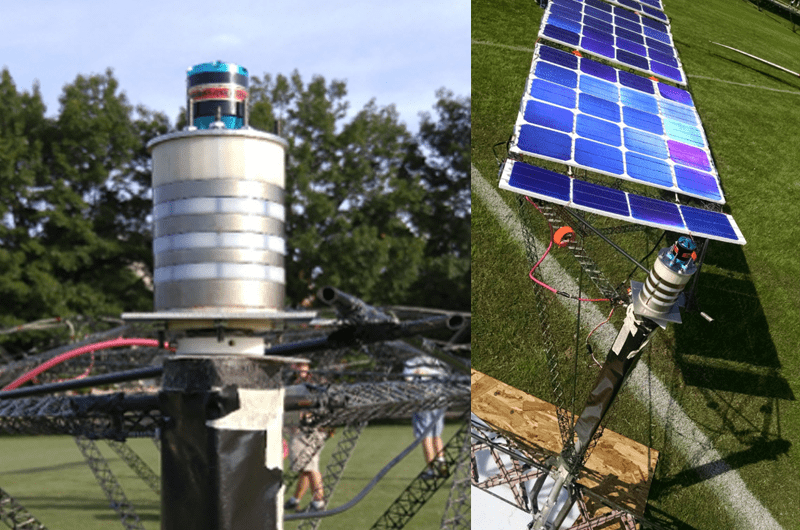
The configuration of 12 Solar panels, three per arm, wired into pairs of six panels provides ≈ 1200 Watts (1.6 horsepower).
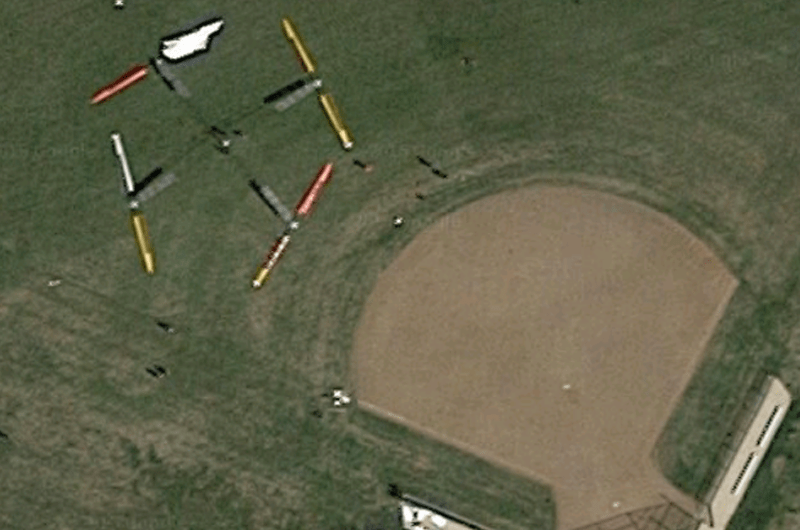
Gamera-S on Google Maps satellite view in the softball field outfield.